Nidarosdomen: Northernmost Gothic Masterpiece
Founded in 997 CE by Viking King Olav Tryggvason under the name Kaupangen, Trondheim was soon rechristened Nidaros and served as the nation’s religious and administrative capital throughout the Middle Ages. The crown jewel of the city is Nidaros Cathedral (Nidarosdomen), constructed over the burial site of King Olav Haraldsson (St. Olav), who fell at the Battle of Stiklestad in 1030 CE.
Built between 1070 and 1300 CE, Nidarosdomen is the northernmost medieval cathedral in the world. Constructed from locally quarried soapstone, its West Front displays intricate tiers of biblical figures, saints, and martyrs restored during an exhaustive multi-decade national initiative. Adjacent to the cathedral stands the Archbishop’s Palace (Erkebispegården), which houses the official Norwegian Crown Regalia and excavated medieval stonework.
Bakklandet and the Timber Wharves on the Nidelva
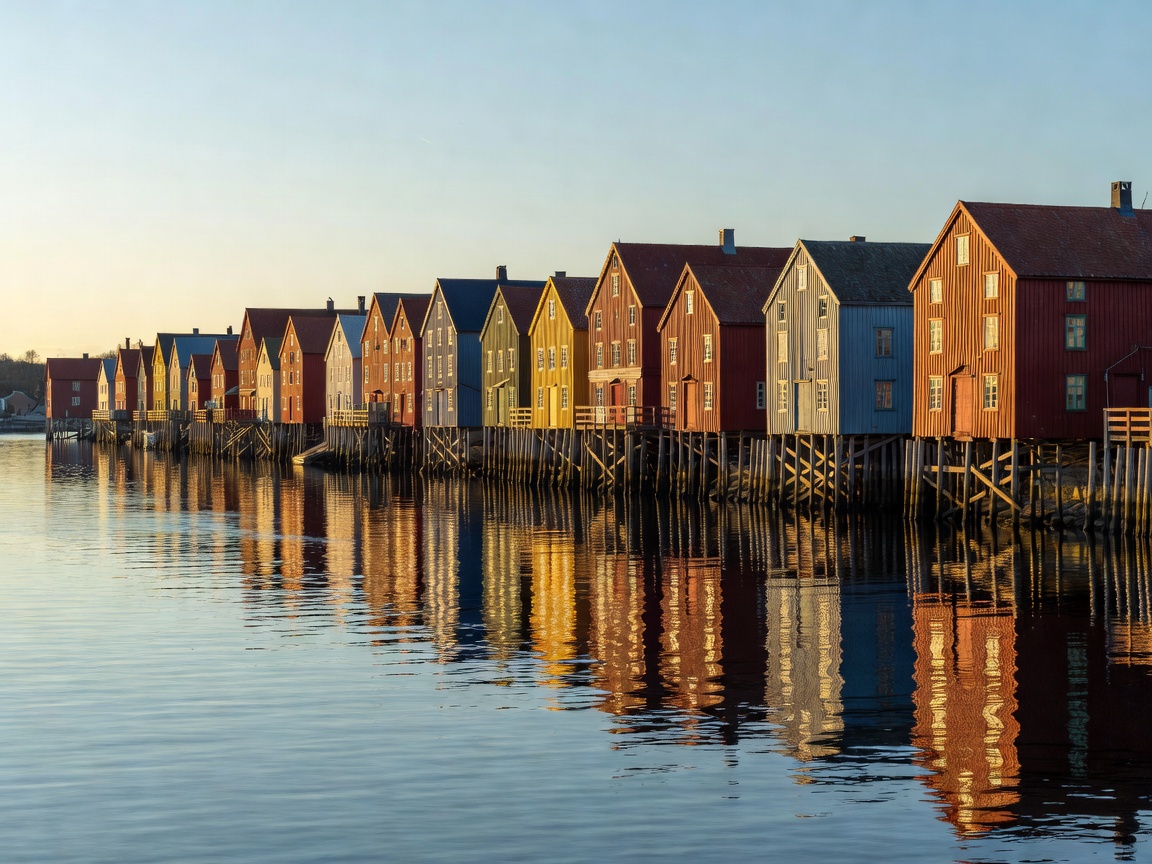
Trondheim’s distinctive visual signature is found along the banks of the Nidelva river, where multi-story wooden storehouses (Bryggene) rest on pilings driven directly into the riverbed. Painted in earthy shades of rust red, ochre, and deep umber, these 18th- and 19th-century buildings once received barges laden with timber, grain, and salted fish.
Connecting the city center to the charming neighborhood of Bakklandet is the Old Town Bridge (Gamle Bybro), constructed with decorative red-carved portals in 1861. Bakklandet itself is a peaceful district of cobblestone streets, small timber houses, independent porcelain workshops, and specialty coffee houses. Nearby on the hill of Brubakken sits the Trampe bicycle lift (Sykkelheis), the world’s first municipal bicycle escalator designed to assist cyclists navigating the steep climb toward Kristiansten Fortress.
The European Region of Gastronomy
In recent years, Trondheim and the surrounding Trøndelag region have emerged as the epicenter of Norwegian culinary innovation, celebrated internationally when named a European Region of Gastronomy. The geography of Trøndelag—featuring rich agricultural lowlands, nutrient-rich fjords, and alpine foraging grounds—supplies Michelin-starred kitchens such as Speilsalen at the historic Britannia Hotel and restaurant Fagn. Menus focus heavily on local sea urchins, langoustines from the Frøya archipelago, indigenous dairy breeds, and heritage grains.
Academic and Research Innovation
Trondheim is also widely recognized as Norway's technological capital. Home to the Norwegian University of Science and Technology (NTNU) and the independent research organisation SINTEF, the city houses over 40,000 university students. This demographic infuses the historic streets with youth culture, student-run concert series at Studentersamfundet, and thriving software engineering startups.
Urban Character & Infrastructure Metrics
| Area / Landmark | Era / Established | Significance | Materiality |
|---|---|---|---|
| Nidaros Cathedral | 1070–1300 CE | National coronation site & pilgrim shrine | Carved green soapstone |
| Bakklandet | 17th–18th Century | Preserved artisan and trade quarter | Timber framing on stone footings |
| Nidelva Wharves | 18th–19th Century | Historical mercantile logistics | Pitch-treated timber pilings |
| Kristiansten Fortress | 1681–1685 CE | Defensive bastion against Swedish incursions | Rammed earth & lime-washed masonry |
Transportation Guidelines
Trondheim Airport Værnes (TRD) is located 32 kilometers east of the city, serviced frequently by regional commuter trains (NSB/SJ Norge) and express airport coaches. Within the city center, AtB manages a modern transit network comprising double-articulated MetroBuss lines, standard urban buses, and regional passenger boats connecting to the Fosen peninsula.